
Sustainable Food
Did you know that it takes 12 X as much resources to produce meat than plant based food. Sustainability starts in the plate with delicious Curry Wraps, Trini food with an Italian twist.
Real sustainability starts on the plate, without ever compromising on taste, craft, or soul. Sunset Roti is built around Trinidadian Roti—hands down the coolest, most flavorful street food on the planet.
Proof of Concept
Over 20 years ago, the architect of the Besos and Clooney weddings, Federico Salza was introduced to authentic Trinidadian Roti by his friend from Trinidad, Ron Samuel.
One bite was all it took: Federico ate roti several times a day for the rest of the trip, sparked by the rich spices and incredible heritage of the Caribbean staple. We deliver that same Caribbean taste.
Trini Flavors
A vibrant fusion of Indian spice, African influence, and Caribbean heat. Centuries-old recipes from India blend seamlessly with complex African flavors and fresh, island-grown ...
This isn’t just about food; it’s a taste of history. From savory doubles and complex Kieone plant- based stews to rich curries, every dish tells a story of cultural blending, historical connection, and island ingenuity.
IT'S A FAMILY AFFAIR
MISSION statement
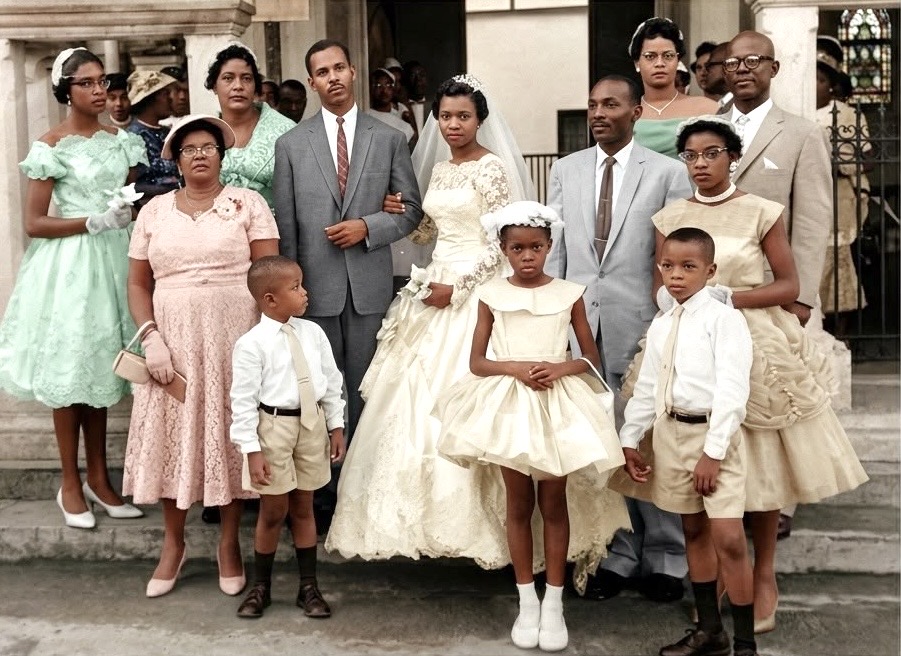
Samuel Family - Five Generations
Just the way Grandma Ruby used to make Trini Roti; uniting the authentic, soul-warming flavors of India, the Caribbean, and Africa, Sunset Roti serves timeless plant-based heritage with an Italian twist—crafted with the love, warmth, and flavor of a true family tradition.
Classic with an Italian Twist!
PROOF OF CONCEPT - POC
Salza Family - Five Generations
Over twenty years ago, educator Ron Samuel and Federico Salza took a vacation together to the island of Tobago. It was there, amidst the Caribbean breeze, that Federico experienced true Trinidadian Roti for the very first time
slow-cooked spices, tender filling, and warm, delicate dough crafted from generational recipes. Federico ate Trinidad Roti multiple times a day, every single day, for the remainder of the trip.
CLASSIC WITH AN ITALIAN TWIST
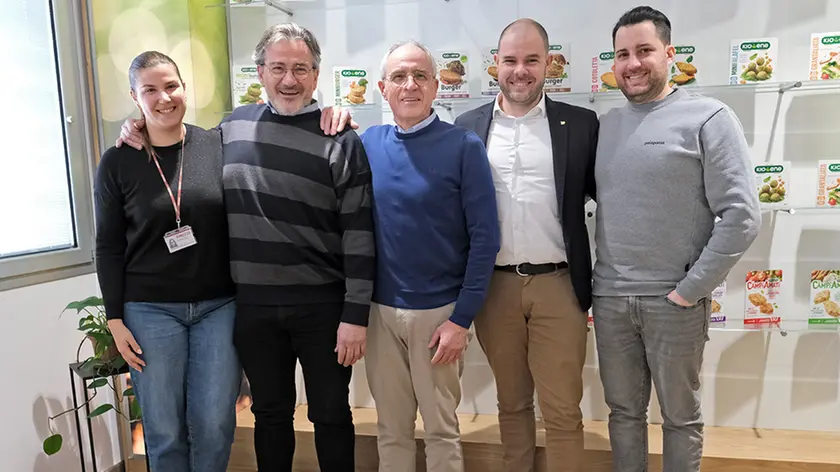
Kioene - Tonazzo Family - Five Generations
Our decision to select Kioene, produced by the Tonazo family, as the core filler for our Trinidad Roti came after exhaustive research. We were not merely looking for a meat substitute; we were seeking a partner with the heritage, technical expertise, and vision.
Meat production is a leading driver of climate change, contributing significantly to global greenhouse gas emissions through methane from livestock. For a truly sustainable future, we must address the 12X greater environmental footprint of meat compared to plant-based options.
Classic Carribean with an Italian Twist!
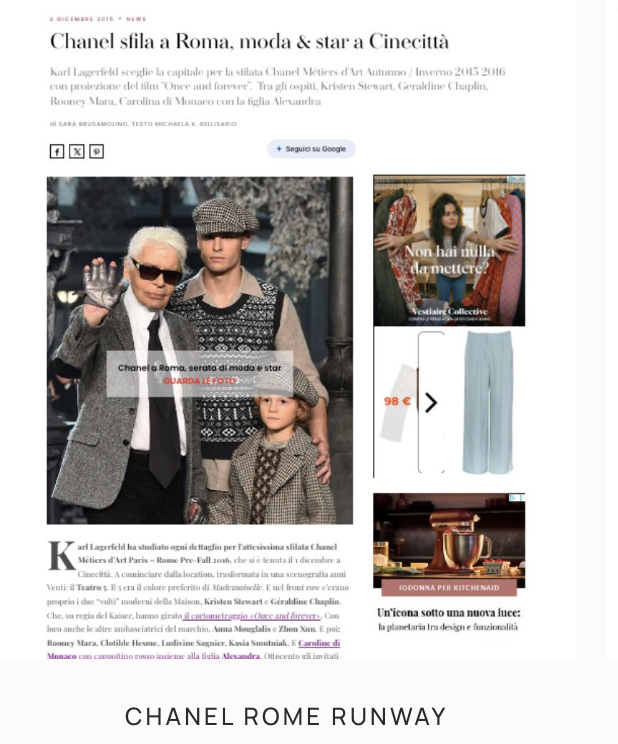
IF IT'S GOOD ENOUGH FOR FEDERICO SALZA....




1. Food
The one fundamental truth that connects all of humanity is the central role food plays in our daily lives. .
The Anatomy of Sustainable Nutrition: From Trinidad’s Agro-Ecology to the Tonazzo Epiphany
Key Takeaways
The Trini Blueprint: How traditional Caribbean gastronomy delivers high-density, low-carbon bio-nutrition using native legumes, ground provisions, and functional spices.
The Tonazzo Shift: How a 100-year-old Italian meat giant experienced an epiphany in Brazil in 1988 and eventually exited the livestock trade entirely to lead clean plant-based protein with Kioene.
The Systemic Convergence: Why the future of global food security relies on merging ancestral culinary biodiversity with industrial-scale clean-protein manufacturing.
Introduction: Beyond "Plant-Based" Marketing
For those seeking to look beyond the surface level of modern food tech marketing and analyze what sustainable food infrastructure actually looks like, two distinct case studies offer a masterclass in systemic transformation: the holistic agro-culinary model of Healthy Trinidadian (Trini) Cuisine and the “Brazilian Moment” of Italy’s Tonazzo Group (Kioene).
a. The Trini Model: Biodiversity & Plant-Centric Resilience
Trinidadian gastronomy is a masterclass in ecological resilience and functional nutrition. Built on a historic fusion of East Indian, West African, Amerindian, and European influences, traditional Trini food instinctively solves the macro-nutritional and environmental challenges that modern food tech is currently trying to engineer from scratch.
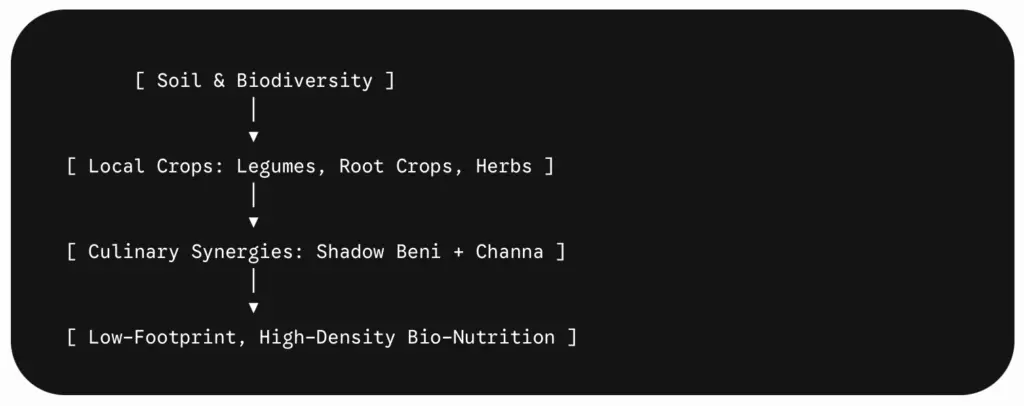
The Culinary-Ecological Pillars Model:
Legume-Centric Protein Architecture: Dishes like Channa (curried chickpeas) and split-pea Dhal deliver complete amino acid profiles when paired with complex grains, eliminating reliance on carbon-intensive animal husbandry.
Ground Provisions: Yam, cassava, and eddoe serve as low-glycemic, drought-resilient root crops that stabilize local soil health while requiring fractionally less water than industrialized grains.
Bioactive Herbology: The extensive use of Culantro (Shadow Beni), turmeric, ginger, and garlic provides natural antioxidant and anti-inflammatory pathways embedded directly into daily meals.
In Trini cuisine, sustainability is not a modern lifestyle luxury—it is an inherited, low-footprint framework built on local biodiversity and high-density plant nutrition.
b. The Tonazzo "Brazilian Moment": Industrial Courage & The Birth of Kioene
While traditional cuisines offer the blueprint for what to eat, transforming global supply chains requires structural shifts at the enterprise level. The gold standard for this corporate evolution is Gruppo Tonazzo and its plant-based brand, Kioene
The Epiphany in South America (1988)
Founded in Padua, Italy, in 1888 as a traditional family butcher shop, Tonazzo operated at the heart of the European meat industry for a century. However, the pivotal turning point occurred during a business trip to Brazil in the late 1980s.
Standing at the epicenter of South America’s expanding industrial livestock trade, Albino Tonazzo recognized an inconvenient mathematical reality:
“The conversion ratio of land, water, and feed required to yield animal protein was fundamentally broken. Realizing that human health and planetary boundaries could not support endless animal protein scaling, Tonazzo made a radical choice: pioneer plant-based alternatives long before a consumer market even existed.”
In 1988, he launched what would eventually become Kioene—combining Ki (inner energy), O (universal harmony), and Ene (planetary energy).
c. The Ultimate Shift: Exiting Meat Entirely
Most multinational food conglomerates treat plant-based lines as a secondary hedge—a greenwashed side venture while maintaining high-volume livestock slaughter. Gruppo Tonazzo broke this convention.
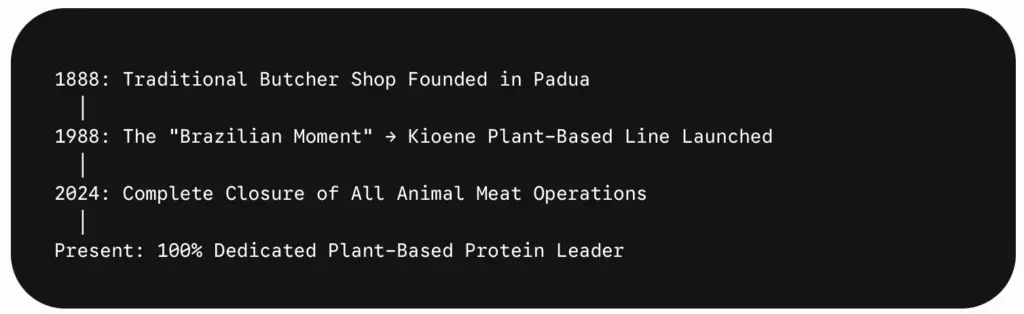
In a historic decision, the Tonazzo Groupannounced the complete shutdown of it meats operations, shifting 100% of its facilities, workforce, and capital strictly into plant-based proteins under the Kioene brand.
Why This Matters for Global Food Security:
Decarbonization at Scale: Life Cycle Assessments (LCAs) show plant-based protein production requires up to 90% less land and generates 10x fewer greenhouse emissions than equivalent animal meat.
Industrial Conversion: Instead of laying off workforce, Tonazzo re-skilled its personnel and repurposed its processing infrastructure in Padova, proving that legacy meat operations can transition into clean-protein hubs without economic collapse.
Mediterranean Alignment: Rather than relying on heavily ultra-processed isolates, Kioene Formulations prioritize whole legumes, grains, and real vegetables—mirroring the clean-ingredient integrity found in traditional diets like the Mediterranean and Caribbean frameworks.
d. Synthesis: The Convergence of Culture and Industry
The future of sustainable food does not require abandoning flavor, culture, or enterprise viability.
| Dimension | Healthy Trini Cuisine | Kioene / Tonazzo Model |
|---|---|---|
| Primary Driver | Cultural biodiversity, low-mile agro-ecology, functional spices | Industrial transformation, carbon reduction, plant-protein scale |
| Protein Source | Channa, lentils, split peas, local ground provisions | High-quality legumes, grains, and vegetable formulations |
| Systemic Impact | Preserves local soil health and traditional culinary wisdom | Proves a 100-year-old meat giant can fully exit livestock for clean protein |
“Whether through the ancestral agro-ecology of Trinidad’s plant-rich tables or the systemic courage of an Italian meat family returning from Brazil to alter industrial history, the imperative is identical: sustainable food is no longer a niche choice—it is the baseline infrastructure of future human survival.“
2. P.O.C. - Proof of Concept
The one fundamental truth that connects all of humanity is the central role food plays in our daily lives. .

We already have all the Proof of Concept (POC) we will ever need. It didn’t happen in a sterile corporate kitchen or during a high-stakes board meeting. It happened in the rhythm of pure intuition, dynamic trust, and the unscripted magic of real life.
If Federico Salza and I could step into any skin, any era, and any life we chose, we’d both be Black jazz musicians sitting in the pocket of a late-night groove. No music stands blocking the view, no yellowing sheet music trapping the imagination—just pure, unfiltered syncopation and a room full of people vibing off each other’s frequency. That ability to improvise, to trust the moment, is the highest form of mastery.
That is jazz, baby, and it’s how Federico and I have always moved.
Like that morning around 2:00 AM during a party at his family villa in Carignano, when I suddenly got the overwhelming urge to go to Milan. I told Federico, and without a second of hesitation or a single note of doubt, he tossed me the keys to his Volvo, telling me exactly where to park it near the train station.
I arrived in Milano at the perfect time, met a California male model, who introduced to Calvin French—the top Trinidadian high-fashion model—starting my path testing models with Calvin as a photographer. That moment opened the door to assisting Graziella Vigo, which ultimately led to meeting Giorgio Armani and his co-founder Sergio Galeotti. One unscripted, intuitive move sparked a whole era.
That exact same unhesitating, instinct-driven jazz ethos carried us straight to the island of Tobago more than two decades ago.
It started on a morning when Federico—who wanted nothing more than to sleep in—was abruptly awakened by a chorus of local roosters. To make amends, I packed him into our rental car and set out toward Pigeon Point. On the way, I pulled off at an unassuming roadside roti shack.
The moment Federico took his first bite, his entire demeanor shifted. His eyes lit up at the collision of rich textures, vibrant flavors, and a subtle orchestra of spices. He closed his eyes and began to sway his head rhythmically—the exact same head-nod he reserved for listening to soft jazz back in Carignano.
From that moment on, the beach took a back seat. He ate roti every single day, multiple times a day.
Today, Federico Salza is recognized as the architect behind some of the most prestigious events in Europe, curating experiences for elite clientele like the Bezos and Clooney weddings. His taste is trusted by the most demanding palates on the planet. If a humble street dish could trigger an immediate obsession in a palate of that caliber, our market validation was complete right then and there.
For Those Who Want to Go Deeper: What a POC Means for Sunset Roti
In business terminology, a Proof of Concept (POC) is a preliminary exercise designed to demonstrate the practical viability and utility of a proposed idea, product, or model before launching at full scale. Unlike an MVP (Minimum Viable Product, which tests an early functional product in the open market, a POC serves as internal validation to answer one fundamental question: Does this core concept work under real-world conditions?
A rigorous POC is essential prior to any launch because it:
Validates Operational & Taste Feasibility: Proves that the core offering—in our case, authentic Trinidadian flavor and street-side energy—delivers an uncompromised experience.
Mitigates Resource & Financial Risk: Identifies potential friction points early, preventing unnecessary burn and ensuring every operational detail is tuned before expansion.
Secures Stakeholder Confidence: Demonstrates to partners and investors that the core thesis is backed by real, unquestionable demand and immediate appeal.
Refines the Core Experience: Separates essential elements of the product from unnecessary noise, keeping the final execution lean, powerful, and authentic.
For Sunset Roti, our journey isn’t a scripted corporate roll-out—it’s a live jam session backed by real-world proof. From the streets of Milan to the road shacks of Tobago, we’ve proven that when taste, intuition, and world-class validation align, you don’t need to ask permission. You just play.
3. Trini Flavor

Have you ever seen a Dougla—the striking, beautiful blend of Indian and African heritage—or the breathtaking mix of Chinese and Black ancestry? It is pure, living art in motion. That same striking grace and natural harmony isn’t just in the people; it lives in every single pot, every spice blend, and every bite of Trinidadian street food.
For Those Who Want to Go Deeper: The Soul of Trini Flavor
This isn’t just about food; it’s a living taste of history. Trini flavor is born from the scorching sun, the salt-crusted sea, the powdery sand, and the cool Caribbean breeze cutting through the humidity. It is the culinary manifestation of Carnival—vibrant, unapologetic, explosive, and impossible to tame.
To understand the plate, you have to understand the melting pot:
The African Roots: Brought over across the Atlantic, carrying resilience, open-fire roasting, heavy earth ground provisions, and deep-stewed flavors that anchor the island’s rhythm.
The Indian Influence: Arriving as indentured laborers after emancipation, bringing centuries-old spice traditions—geera (cumin), turmeric, garlic, and hot peppers—forever transforming the island with curries, dhalpuri, and the art of the tawa-slapped roti.
The European & Asian Intersections: French, Spanish, British, and Chinese influences weaving seamlessly into the tapestry, adding subtle savory layers, fresh shado beni, and unique frying techniques.
The ultimate symbol of this synergy is Callaloo—a dish where everything goes into the pot. Soft dasheen leaves, okra, coconut milk, scotch bonnet peppers, and aromatic herbs simmering together until the boundaries between individual ingredients disappear into one rich, velvety masterwork. Callaloo is as old as the people themselves. It represents the ultimate island truth: no matter where your ancestors boarded the ship, once you hit these shores, everything blends into one unified, unforgettable flavor.
That striking, unscripted blend—that art in motion—is the exact soul we wrap into every single Roti at Sunset Roti. And we fit all of that culture, history, and explosive flavor into a street food you can carry in one hand.
IT'S A FAMILY AFFAIR - 5 PLUS GENERATIONS
The Samuel Family
Strategic Resilience: The Samuel Family Global Trajectory
The Samuel family trajectory is a multi-generational narrative of resilience, geographical migration, and dramatic reinvention—stretching from the Caribbean gold fields of Venezuela to the elite social strata of Caracas, and ultimately bridging the United States and Italy.
The Samuel family trajectory is a multi-generational narrative of resilience, geographical migration, and dramatic reinvention—stretching from the Caribbean gold fields of Venezuela to the elite social strata of Caracas, and ultimately bridging the United States and Italy.
1. The Early Lineage: St. Vincent, Venezuela, and San Fernando Hill
The earliest recorded history of the Samuel family begins in St. Vincent, from where the family migrated to Venezuela during the gold rush era. In Venezuela, the family established commercial stores supplying gear and provisions to local gold miners.
A critical turning point occurred when one of Grandfather Isaac Samuel’s brothers contracted malaria. The family made the decision to travel to Trinidad to seek medical treatment for him. During the journey, a disruption occurred and the family became separated.
Despite the separation, Grandfather Isaac settled in Trinidad, building a prominent life:
Career: He served as a police officer and later operated as a driving instructor.
The Family Homestead: The family constructed their primary home atop San Fernando Hill (Sando Hill), a landmark overlooking the city of San Fernando.
The Global Dispersion: In subsequent years, the next generation began migrating internationally—Auntie Georgi emigrated to England, while the mother of the family relocated to the United States.
2. The Father’s Journey: Escape, Survival, and Elevation in Caracas
The father’s chapter began under high-stakes circumstances in Trinidad when political or institutional complications forced him to flee the island covertly by night on a small boat bound for Venezuela.
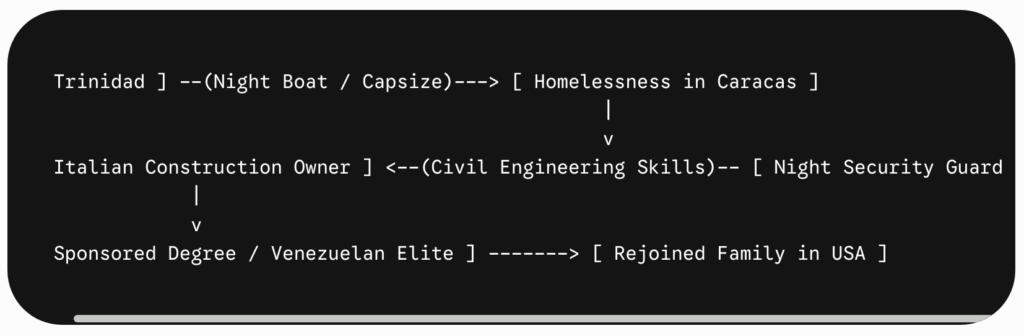
The Maritime Crossing: During the transfer at sea, a severe storm struck, causing the boat to capsize. He survived, but lost all his financial resources and arrived in Caracas penniless.
Street Survival in Caracas: Facing initial homelessness, he adopted a nocturnal survival strategy: staying awake all night during the most dangerous hours and sleeping during the daylight.
The Construction Break: He secured a job as a night security guard at a local construction site, sleeping on-site. The construction firm was owned by an Italian entrepreneur.
The Technical Pivot: When the Italian owner brought him English-language documents to review, he did not merely correct the grammar—he began making structural and technical recommendations, revealing his background as a Civil Engineer.
Professional Elevation: Recognizing his talent, the Italian owner sponsored his official engineering re-qualification in Venezuela. Their relationship evolved into a close partnership; the owner introduced him into high-society social circles attended by the Venezuelan elite. Eventually, he re-established contact with his family and joined them in the United States.
. The Next Generation: USA to Italy
In the United States, the brothers pursued distinct high-level paths across athletics, military service, and international commerce:
Tony Samuel: Achieved a successful career in American Football.
Ron Samuel:
Military Service: Enlisted for a 3-year term in the US Army after high school to secure funding under the G.I. Bill for higher education.
The Camp Darby / Salza Connection: While stationed at Camp Darby in Italy, he met Federico Salza, who was 16 years old at the time. The two formed an enduring bond; Federico became the informal mascot of Camp Darby and spent considerable time staying at the base.
Academic & Professional Career: Following his military service, he attended UCLA for studies in economics, eventually establishing a multi-decade career in the fashion and luxury industry in Italy, anchored in Pisa.
The Salza Family

Strategic Lineage: The Salza Family Architectural Matrix
1. Salza Family's Historical Roots: Spain to Torino. The ancestral trajectory of the Salza family traces a strategic arc across Southern Europe, originating in Spain before establishing its operational roots in Torino—
the historical beating heart of Italian industrial strategy and political power. From this Piedmontese bastion, the family cultivated an enduring legacy defined by discretion, high-level institutional access, and seamless integration into the core of northern Italian industrial governance.
The Salza family’s historical authority in high-end culinary arts and cocoa importation dates back to their late 19th-century origins in Turin and Pisa, reportedly extending to strategic national roles in commodity purchasing.
2. The FIAT Intersection & The Agnelli Dialogue Historical accounts and regional industry narratives suggest that during the pivotal expansion years of FIAT (Fabbrica Italiana Automobili Torino, the Salza family was among the select circle of established northern lineages approached by the Agnelli dynasty...
to participate in the capitalization and strategic alignment of the automotive enterprise. This proximity to FIAT’s core leadership underscores a historical position not merely as observers, but as trusted stakeholders within the inner orbit of Italian industrial capital.
3. Event Architecture as a Projection of Power For decades, the Salza family—most notably through Federico Salza and the FAME architecture—has operated under a unique conceptual framework: Events as an Instrument of Soft Power.
The Philosophy: A high-level event is not mere hospitality or celebration; it is a software update to semiotics, a physical mechanism for transmitting authority, status, and narrative alignment.
Operational Execution: By curating ultra-exclusive gatherings for global power brokers, cultural icons, and corporate leadership (ranging from George Clooney to international political elites), the Salza event apparatus functions as an unshakeable megaphone—shaping perception and consolidating authority under the guise of flawless execution.
4. Innovation in Food Science: Silvio Salza and Gluten-Free Development In line with the family’s tradition of pioneering high-end craftsmanship, Silvio Salza expanded the family’s footprint into culinary innovation and food technology.
Anticipating modern dietary demands long before they became mainstream industry trends, Silvio led early research and development into premium gluten-free (senza glutine) pasta formulations. By engineering products that maintained the structural integrity, texture, and taste profile of traditional Italian pasta without gluten, the initiative demonstrated how artisanal mastery can drive technical innovation in nutrition and wellness.
Phase 1: The Iberian Genesis — The Mobile Court
Long before the modern concept of high-end event design existed, the architectural roots of the Salza family legacy were forged across the Iberian Peninsula.
In Golden Age Spain, political authority was not merely declared; it was staged. Power required a physical, theatrical presence, and the courtly event architects of the era operated as mobile ministries of culture and soft power.
These master orchestrators did not wait in static palaces. They commanded massive traveling caravans—wooden carts and mule trains bearing silk tapestries, rare spices, custom staging equipment, and elite artisans across the Spanish countryside. Moving from royal courts to noble fortresses, these caravans possessed the unique ability to transform a barren courtyard into an elevated, immersive spectacle overnight.
Phase 2: Aristocratic Rivalry as a Design Crucible
In 16th-century Spain, hosting a royal procession or international delegation was an act of high-stakes competition among the aristocracy. Noble houses competed fiercely to outdo one another in creativity, sensory detail, and sheer logistical execution
Events became a refined weapon of prestige:
The Psychology of Spectacle: Hospitality was used to signal financial dominance and political proximity to the Crown.
The Imperative of Novelty: Organizers were pushed to constantly innovate—pioneering ephemeral architecture, synchronized theatrical machinery, and artificial fountains to captivate foreign emissaries.
Flawless Command Under Pressure: Executing complex, multi-day gatherings in remote locations without modern infrastructure demanded absolute mastery over logistics, timing, and contingency management.
Phase 3: The Piedmontese Evolution & Modern Dominance
When these operational roots transferred to Torino—the historical industrial and strategic heart of Northern Italy—this centuries-old legacy evolved into a modern philosophy of power projection.
The intense pressure of the old-world Iberian court prepared the family apparatus to operate without equal in the modern era. Today, whether orchestrating gatherings for global icons, corporate titans, or cultural leaders, the Salza event architecture does not simply host gatherings. It deploys a hereditary mastery of logistics, narrative, and semiotics—turning high-level events into unshakeable instruments of global influence.
The Tonazzo Family - Kioene
The Tonazzo Family, Strategic Motivation, & Kioene
Deep Dive: The Tonazzo Family, Strategic Motivation, & Kioene
The story of the Tonazzo family represents a remarkable industrial transition: a traditional Italian meat producer anticipating environmental and nutritional shifts decades ahead of the global market to pioneer plant-based protein.
The Combined Concept: “Kioene” translates conceptually to “Vital Life Energy”—a brand identity designed to convey that plant-based nutrition provides active, sustainable energy directly from the earth.
1. Historical Foundations: From Traditional Butcher to Industrial Leader
1888 Genesis: The Tonazzo family’s venture in the agri-food sector began in 1888 in the Veneto region of Northern Italy. Starting as a local artisanal butchery, the family built a reputation across generations for quality control and supply chain management.
Industrial Scale: Over the 20th century, Gruppo Tonazzo expanded into one of Italy’s major meat processors, supplying beef products across national retail channels.
The Strategic Pivot (1988): Exactly 100 years after their founding, the third and fourth generations made a counter-intuitive discovery: continuing to rely exclusively on animal protein was structurally unsustainable for both global environmental health and long-term business scalability.
2. Core Motivation: The Paradigm Shift to Plant Protein
The driving motivation behind the family’s transformation was grounded in forward-looking foresight rather than temporary trend-chasing:
Environmental & Resource Efficiency: The family recognized early that plant protein requires a fraction of the land, water, and energy compared to livestock rearing.
Nutritional Welfare: The goal was to provide high-protein alternatives that did not require consumers to sacrifice traditional Mediterranean culinary habits or flavor profiles.
Pioneering First-Mover Advantage: In the late 1980s, plant-based alternatives were virtually non-existent in mass-market Italian supermarkets. Gruppo Tonazzo invested heavily in research and development (R&D) to build meatless options before the mainstream market recognized the demand.
Historic Exit from Meat (2023–2024): Demonstrating absolute conviction, Gruppo Tonazzo announced a complete phase-out of their traditional meat processing business to focus 100% of their operations and capital on plant-based food production.
3. Etymology & Meaning of “Kioene”
In 1988, the family launched their flagship plant-based brand, Kioene. The name was carefully constructed to reflect a philosophy of energy, vitality, and life:
| Component | Etymological Origin & Meaning |
|---|---|
| Kio (Ki / Qi) | Derived from the Eastern philosophical concept of Ki (or Qi), representing the vital life force, natural flow, and energy that animates all living things. |
| Ene (Energia) | Rooted in the Italian/Latin word for Energy (Energia), emphasizing physical vitality, nutrition, and stamina derived from natural plant sources. |
The Combined Concept: “Kioene” translates conceptually to “Vital Life Energy”—a brand identity designed to convey that plant-based nutrition provides active, sustainable energy directly from the earth.
Strategic Impact Summary
The Tonazzo Family transformed from a 19th-century Veneto butchery into Europe’s plant-based pioneer. Through Kioene, they proved that traditional industrial lineages can disrupt their own core market to lead sustainable nutrition forward.